A fried-chicken chainthat hired the peoplenobody else would.
Hot Chicken Takeover built a beloved Columbus brand on an unlikely idea: hire people coming out of prison and homelessness, support them fully, and watch loyalty become the edge. LOUD backed it early — not for the margins, but for the mission — and helped carry it from a pop-up window to a successful exit.
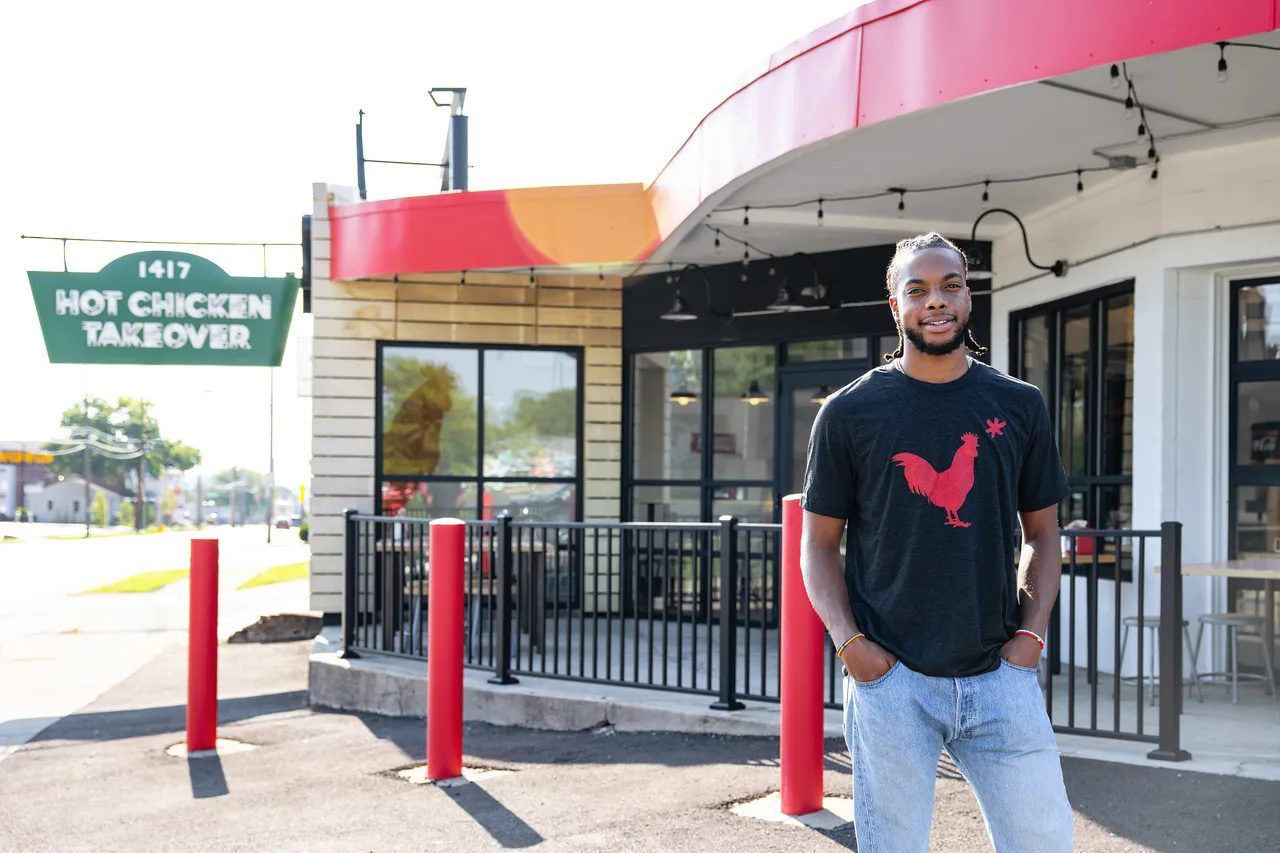
A mission the market wasn't built to fund.
Joe DeLoss didn't start Hot Chicken Takeover because he loved fried chicken. A former investment-banking analyst, he loved being a job creator — and he'd built a thesis that the people other employers screen out could become the most loyal team he'd ever have.
After a 2013 trip to Nashville, DeLoss launched HCT in 2014 as a weekend pop-up window in Columbus, funded a food truck through Kickstarter, and opened his first permanent stall in the historic North Market. From day one the mission was the model: fair-chance employment — hiring people with criminal records or histories of homelessness, then wrapping them in support most jobs never offer: financial-literacy training, 0% emergency loans to replace predatory payday lenders, savings matches for housing and transportation, and counseling referrals.
Between half and two-thirds of the team, at any time, had criminal records. It was a beautiful idea — and a hard one to finance. Traditional capital sees risk in that story. LOUD saw the whole story.
- ✱ A pop-up-to-storefront concept with cult-favorite chicken.
- ✱ A radical, cost-carrying social mission baked into operations.
- ✱ A founder rich in conviction, early in the capital journey.
- ✱ A model most investors couldn't price — or wouldn't.

"Capital with heart."
Navin Goyal first found Hot Chicken Takeover the honest way — as a customer, at the North Market in downtown Columbus. What pulled LOUD in wasn't a spreadsheet. It was a founder using a business to elevate people the economy had written off. LOUD treats impact and returns as one thing, not a trade-off.
Backed the mission, not just the margin
LOUD came in early because it shared the conviction — that betting on the people other employers screen out is both a moral and a business advantage. Shared passion is what carries a company through the hard years, and there are always hard years.
Opened doors — and held the line in the storm
Beyond capital, LOUD connected DeLoss to restaurant-industry leadership (including a senior leader out of Wendy's headquarters), raised funding to fuel growth, and helped secure financing to survive the pandemic — the moment that decides which restaurants live.
From a pop-up window to a national story.
The climb wasn't luck. It was a decade of deliberate moves — and LOUD was in the room for the ones that mattered most.
The idea, the truck, the North Market
A Nashville trip sparks the concept. DeLoss opens a weekend pop-up in Columbus's Olde Towne East, crowdfunds a food truck on Kickstarter, and lands his first permanent home in the historic North Market — fair-chance hiring built in from the start.

LOUD invests — capital with heart
Navin Goyal discovers HCT as a customer, then LOUD invests as an early backer alongside mission-aligned partners. Not a passive check: LOUD steps in as a strategic advisor who believes in the mission as much as the founder does.
Doors, dollars, and a growth vehicle
LOUD introduces DeLoss to restaurant-industry leaders, including a senior executive from Wendy's headquarters, and raises funding to finance expansion — turning a local favorite into a scalable operation.
Rapid expansion — and the strain of it
HCT opens in Clintonville and at Easton Town Center, scaling from about 40 to 170 team members in six months. Growth that fast tests the very culture that made the first location special — the central challenge of scaling a people-first company.

Harvard comes calling
Harvard Business School publishes a case study on HCT's fair-chance model (Case 819-078) — national validation that a purpose-built culture is a real, teachable competitive strategy. A Cleveland-area location follows at Crocker Park.
Surviving the pandemic
As COVID shutters restaurants everywhere, LOUD helps HCT access financing to weather the storm. DeLoss keeps communication with investors radically honest through every vendor change and cost spike — the trust that holds a partnership together.
The exit
Hot Chicken Takeover is acquired by Untamed Brands — a successful exit for LOUD. The acquirer's draw wasn't only the chicken; it was the fair-chance employment model, and the hope of applying it across a wider portfolio.
An all-star buys in
Two-time NBA All-Star Darius Garland — a Cavalier who played college ball in Nashville — invests in HCT under Untamed Brands and takes a board seat, drawn to the Fair Chance mission. Proof of the brand's enduring gravity, years after LOUD's bet.
What the early bet actually built.
The value of patient, believing capital shows up in the outcomes: a workforce that stayed, a model the world studied, and an exit that proved doing good and doing well can be the same sentence.
Employee retention — about double the restaurant-industry norm — driven by 0% emergency loans, savings matches, housing help, and counseling. Hundreds of second-chance careers built.
A Harvard Business School case study and national coverage — including a 2022 Bloomberg feature on tackling criminal-justice reform through jobs — turned a Columbus chicken shop into a model.
The 2021 acquisition was a successful exit for LOUD and validated the thesis: an acquirer wanted the fair-chance employment model, not just the recipe.
Heart is a moat
A mission that genuinely elevates people produces loyalty — from staff, customers, and press — that money can't easily buy and competitors can't easily copy. The culture wasn't a cost center; it was the durable advantage that carried HCT to a Harvard case and a profitable exit.
Proximity is the alpha
LOUD's edge wasn't the size of the check — it was being close enough to share the founder's conviction, open the right doors, and show up in the crisis. Capital that stands beside the founder is worth more than capital that merely funds them.
The lesson in what came after.
After LOUD's exit, HCT passed through larger owners — Untamed Brands, then Craveworthy in 2024 — and, stripped of its origin principles, eventually wound down. In the restaurant world, consolidation and rebranding often end this way. But the coda underlines the whole thesis: when a mission-built brand is separated from the heart that made it, the magic fades.
The years that mattered — the ones LOUD helped build — created hundreds of second-chance careers, a Harvard case still taught today, and a proof point that changed how people think about who's worth hiring. That's the return that doesn't show up on a cap table. Capital with heart doesn't just chase the exit — it leaves something behind that outlasts it.
The best returns and the deepest impact were never a trade-off.
LOUD backs builders whose mission is the model — and stands beside them from the first check to the last mile.
Build with LOUD →